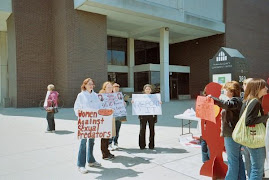
Monday, March 17, 2008

Windsor Locks Considers Sex Offender-Free Zones

WINDSOR LOCKS — - The town may join others in the state considering local laws to protect children against sex offenders.


Selectwoman Denise Balboni wants the town to look into adopting an ordinance that would ban convicted sex offenders from places frequented by children.


Balboni, who has asked the town attorney to investigate whether the town should adopt such an ordinance, said she has been approached by a resident concerned about the number of registered sex offenders in town. The ordinance would fine sex offenders if they're found in established zones, which could include parks, playgrounds, recreational areas and sports facilities, she said.


Sixteen registered sex offenders live in Windsor Locks, according to the state Department of Public Safety.

"That's a pretty high number considering the small town that we live in," said Balboni, who announced her proposal in a statement Wednesday. "Creating a ... zone would provide a level of protection that doesn't exist today."

Actually, the town's sex offenders per capita are about the same as the statewide average, according to data from the state Department of Correction.

Among the town's 12,300 residents, the 16 offenders equal 1.30 per 1,000 population — fractionally below the statewide average of 1.33 per 1,000 population. Hartford has nearly four registered offenders per 1,000 population, the most per capita in the state.

Bristol, with 1.4 offenders per 1,000 population, and Stafford, with 1 among every 1,000 people, have been considering similar proposals.

Danbury became the first municipality in Connecticut to pass such an ordinance, although the number of offenders per 1,000 population there — 0.54 — is among the lowest in the state's larger communities, according to correction department figures. It went into effect in mid-February.

Balboni was approached with the idea by school board member Michael Royston.

"I have heard from quite a few different people, and it is definitely an issue," Royston said.

Contact Lynn Doan at ldoan@courant.com.

Gotta Love Math

Gotta love Math


For a mere $28,500 a month being paid from the pockets of the State of California, residents in a small area can now live in constant fear of their safety and worry about the place down the road that is housing 19 sex offenders. And the owner of the place can continue to cash those big checks.


At 1149 E. 1st St. in Long Beach, where at the same time as many as 19 rapists and child molesters on parole have resided in an apartment building near two licensed day-care centers, the question, and its elusive answer, have become an emotionally charged issue.


The state pays Mile Milivojevic who owns the rentals about $1500 per sex offender- times 19 sex offenders... he must feel like he hit the lottery. Although neighbors aren't feeling so lucky.


Joe Quiniro, 49, said his wife wants to move out of the condominium they bought 3 1/2 years ago for $200,000.


"I don't want to go; I love this place," he said. "But we don't want to live like prisoners in our own home."


With angry residents demanding action, the Long Beach city attorney's office and the parole board of the California Department of Corrections and Rehabilitation are weighing the rights of the parolees against residents' concerns. Meanwhile, the Long Beach City Council has unanimously agreed to draft an ordinance that would ban high-risk registered sex offenders from being allowed to live within 2,000 feet of a day-care center.


On Tuesday the Los Angeles County Board of Supervisors, at the urging of Supervisor Mike Antonovich, directed the county counsel to determine if state law allows local governments to restrict the housing of sex offenders in neighborhoods. Under state law, a convicted sex offender released on parole since 2006 may not live within 2,000 feet of parks or primary or secondary schools.


What makes this so interesting is really the math- and not just when you start adding up the amount being raked in by this. See, according to the article:

State law bars more than six registered sex offenders on parole from living together in a residential care facility, unless they are legally related by blood, marriage or adoption. Only one sex offender is allowed to live in a single-family dwelling. The law, however, does not address the number of sex offenders allowed to live in an apartment building, authorities said.


Make note of this line : Only one sex offender is allowed to live in a single-family dwelling. An apartment complex may not be a single family residence, but a single apartment within that complex is. And- it's a 12-unit complex... so just how did 19 sex offenders live there?

The problem surfaced in January when ownership of the building changed hands and tenants began noticing increasing numbers of what they described as scruffy-looking men on the premises. The new owner told renters, including families with children, that the men were "maintenance workers," according to Deputy City Atty. Crystal Meyers.


By the end of the month the building's previous tenants had been replaced by 19 registered sex offenders, some living three and four to a unit.


Last week, the number had dropped to 12, according to postings on the Megan's Law website, which provides detailed information on registered sex offenders.


One has to wonder what happened to the other seven, and just how long the number will stay at 12.


Btw, just to mention- the going rate for apartments in that area is $500 below what is currently being paid- with tax payer money. Nothing like having to fund the living cost of a sexual deviant.


Report: Calif. turns apartment building into 'sex offender cluster'

Despite state laws that are supposed to limit the number of unrelated sex offenders living under the same roof, the Los Angeles Times says an apartment building in Long Beach, Calif., has been converted into a home for as many as 19 registered sex offenders.


The paper says outraged neighbors are describing the 12-unit building as "the predator house."


"A female neighbor carries a baseball bat at night for protection. Many families have added extra deadbolts to their doors," the paper says. "At least one couple has moved out of the downtown neighborhood of palm-shaded apartments and condominiums less than two blocks from the beach. Children no longer play outside without parental supervision."


The state pays landlords about $1,500 a month for each parolee. The paper says that's about $500 more than the going rate for an apartment in the building.


"I hate it. I want them out. I'm afraid to go out and get the mail. They've ruined our neighborhood," Jane Szabo says. "As soon as we found out about this, seven of us printed brochures and color photographs of the gentlemen and then went door to door in the rain to alert neighbors."


The Press-Telegram says city officials are considering a new ordinance that would restrict where registered sex offenders are allowed to live.


As of this afternoon, state records showed that 10 registered sex offenders -- mostly rapists and child molesters -- lived in the building.


This isn't a unique situation.


The Times recounts another instance in which state officials warehoused 47 recently released sex offenders in the same East Los Angeles building.


"As soon as we became aware that there was a high school nearby, district administrators were instructed to relocate the parolees," Gordon Hinkle, a spokesman for the parole board, tells the paper.


Former Eagles player Al Chesley encourages child sexual abuse victims to speak out

WILMINGTON, Del. — Former NFL linebacker Al Chesley said Wednesday he was sexually abused as a teenager and is encouraging victims of child sexual abuse to step forward and tell their stories.

Chesley, who played for the Philadelphia Eagles from 1979-82, joined members of the Survivor's Network of those Abused by Priests (SNAP) in praising a new Delaware law that allows victims of child sexual abuse to seek civil damages for abuse that occurred years ago.


"I'm 50 years old and I'm finally able to talk. ... I'm not so ashamed of my past," he said.


Chesley said he was abused as a young teenager by a member of the Washington, D.C., police department. Recounting his abuse for the first time publicly, Chesley said it was only within the past year, after meeting SNAP San Diego chapter director Paul Livingston, that he began to feel comfortable talking about his past.


"I just want to free myself," he said.


Chesley was accompanied by Livingston and SNAP southwest regional director Joelle Casteix. The three submitted a letter to Wilmington Police Chief Michael Szczerba, encouraging him to educate the police force and the public about this matter. They said the new Delaware law can help expose predators and perhaps uncover evidence that could be used in criminal cases to put more molesters in jail.


Livingston and Casteix took advantage of a 2003 California law, similar to Delaware's, that allowed a one-year "lookback" window for victims to file lawsuits that previously had been barred by the statute of limitations. Delaware's law, enacted last year, allows a two-year lookback period.


According to SNAP members, California's civil window has led to criminal convictions against three child predators.


"This law is the only way we can get molesters off the street right now," Casteix said.


Casteix said she and Livingston were among 90 plaintiffs who settled with the Catholic diocese of Orange County, Calif., in 2004 for a total of $100 million. A key to the settlement, she said, was the release of church documents showing that the diocese knew about the abuse and did nothing to stop it.


The Associated Press

Sacramento judge denies ‘disgracing the American Judiciary System’

The strange and bewildering case of Judge Peter J. ‘Chainsaw’ McBrien

This article was published on 03.06.08.

ILLUSTRATION BY ROBERT ARMSTRONG

Don’t get mad, the saying goes, get even. Certainly Ulf Carlsson has plenty to be angry about. In 2006, the Swedish-born American citizen entered divorce proceedings hoping to make the best of a bad situation. Instead, he lost custody of his teenage daughter, got fired from a 20-year career with the state of California and is about to lose his home.


So, yes, Ulf Carlsson is massively pissed, and the entirety of his ire is focused on the individual he holds accountable for his astounding reversal of fortune, the magistrate who presided over his two-day divorce trial, Sacramento Superior Court Judge Peter J. “Chainsaw” McBrien.


Last week, Carlsson and more than a dozen other self-proclaimed victims of McBrien’s alleged legal abuse officially notified the Sacramento Elections Office of their intent to recall the judge. They didn’t waste any time getting to the point.


“You are a disgrace to the American Judiciary System and an extreme danger to children and parents,” the recall petition begins, before detailing a number of alleged wrongs along with the relevant case numbers. “You destroyed a young boy by awarding the father custody after multiple investigations substantiated he had sexually abused the boy. … You awarded custody to an abusive mother, ignoring medical evidence that she seriously physically abused her young daughter. … You obtained, in secrecy, a copy of the court transcripts, altered them and had that respondent’s career destroyed. … When will your evil terrorism be stopped?”


A little over the top? Perhaps. But they don’t call McBrien “Chainsaw” for nothing. In 1999, he ordered a whack-job on a half-dozen oaks blocking his bluff-side view of the American River, knowing full well the trees were on public property, thus making the act of cutting them down felony vandalism. Unless, of course, you happen to be a judge with $20,000 on hand to bargain the crime down to a misdemeanor—and keep your ass firmly planted on the bench.


David Palmer, a Rancho Cordova resident who’s earned a national reputation as a judicial watchdog, lists McBrien in the “Criminals” chapter of his self-published Judicial Misfits: A Factual Exposé of an Industry Answerable Only to Itself. McBrien should consider himself lucky. Other chapter titles include “Child Molesters,” “Sadists” and “Miscellaneous Perverts.” Unfortunately, they’re aptly named, and as Palmer’s well-researched book demonstrates—with a healthy dose of sarcasm—virtually no crime short of homicide seems heinous enough to result in a judge’s removal from the bench.


The wisecracking Korean War vet made sure to mail McBrien an autographed copy of the book. Palmer’s own battle against the legal system began two decades ago, in Toledo, Ohio, after his wife was involved in a near-fatal auto accident, and a couple of attorneys attempted to help themselves to some of the insurance proceeds. Last week, I met with him and Carlsson at the latter’s spacious Gold River home, which he may soon lose to foreclosure.


Palmer’s war stories, which include more than a few victories, provided Carlsson a much-needed boost. His life turned upside down in McBrien’s courtroom, after the judge fixated on an issue that had little to do with the divorce: his failure to list a rental property on forms required for all state employees by the Fair Political Practices Commission. Sacramento Mayor Heather Fargo paid a $2,000 fine for a similar omission last year. After McBrien or someone from McBrien’s office sent a copy of the transcript to Carlsson’s boss at the Department of General Services, it cost the Swede his job.


“These are vindictive people,” Palmer growled. “McBrien will destroy you if he can.”


For his part, McBrien doesn’t deny that. In fact,in his sworn response to the recall petition, the Univeristy of Southern California law school graduate, one-time Deukmejian appointee and 20-year veteran of the bench, denied practically every allegation but destroying Carlsson’s career.


“I deny disgracing the American Judiciary System,” he stated. “I deny giving children to sexually or physically abusive parents. I deny cutting down trees on public property.”


Tricky, that last denial. True, he didn’t do the cutting himself—he hired a chainsaw-wielding tree-killer. And while he denies “altering any public record,” he doesn’t deny obtaining the transcript that was sent to the Department of General Services and later used as grounds for Carlsson’s dismissal. Not that it matters. As one of the state’s leading legal scholars told me when I first wrote about McBrien last August, if a judge suspects you’re breaking the law, no matter how minor the infraction, he legally has the right—perhaps even the duty!—to report it.


I was going to note that this very same scholar helped author the law that supposedly put teeth in the Commission on Judicial Performance, the state watchdog agency that subsequently slapped old “Chainsaw” on the wrist for felony vandalism and allowed him to remain on the bench, but I didn’t want to make you mad.


There are enough people trying to get even around here already.


Jehovah's Witnesses elders refusing to testify in Murrieta molestation case

By TAMMY McCOY
The Press-Enterprise

A legal battle is looming over Riverside County's need to protect children, and people's right to practice religion without government intrusion.


A prosecutor wants leaders of a Jehovah's Witnesses congregation to testify about what a Murrieta man accused of molesting two girls told them. So far, two of the elders who oversee the Windsong Valley Congregation in Wildomar say that defendant Gilbert Simental's statements are confidential and they do not want to testify.


Simental's attorney Miles Clark says his client is innocent of the molestation charges.


Story continues below


Riverside County prosecutor Burke Strunsky says the elders should testify because they have already told others that Simental admitted to molesting two girls, and therefore confidentiality laws do not apply, court records state.


California law protects statements made to clergy members who are required by their faith's practices to keep them secret.


Many of the nation's courts have traditionally respected the rights of religious organizations to keep communications secret and beyond the reach of the law, said Colorado-based attorney L. Martin Nussbaum, partner in the firm Rothgerber Johnson & Lyons.


This protection encourages people to confide in their spiritual leaders, said Nussbaum, who is co-chairman of his firm's Religious Institution Group.


Lawyers who bring suits against religious groups often say the law's penitent-clergy privilege is used to conceal evidence in child sex-abuse cases.


"Religious organizations have used and abused the privilege to protect themselves from liability and responsibility," said Minnesota-based attorney Jeff Anderson, who seeks redress for his clients.


Religious groups argue the privilege covers internal communications and communications with their members. But Anderson said the privilege actually applies when a person is seeking spiritual guidance or making a confession.


California's courts are among a few in the nation to rule against religious leaders who refuse to release information under the penitent-clergy privilege, Nussbaum said.


In 2005, two California courts ruled that Jehovah's Witnesses and the Roman Catholic archbishop of Los Angeles had to turn over information related to child sex-abuse claims. Both lost their argument that the information was protected by the penitent-clergy privilege.


Murrieta Case


Simental, 49, of Murrieta, is charged with molesting two of his daughter's friends when they came to his home for sleepovers between July 2005 and July 2006, according to court papers.


The girls are sisters who were 9 and 10 at the time, according to the court records.


"My client is looking forward to going to court and clearing his name," said Clark, Simental's attorney. "He knows the allegations are false."


Simental is free on $1 million bail following his arrest in 2006. Simental's wife filed for legal separation from him in 2007.


A Murrieta school principal called police after the girls' mother said she did not want Simental near her daughters, according to court records. One of Simental's two daughters attends the same school, court records show.


Simental faces 30 years to life in prison if convicted. His trial has not begun. He is due in court Thursday.


Strunsky, the prosecutor, argues in court papers that Simental confessed in 2006 to the elders that he sexually abused the sisters.


That summer the girls' parents went to congregation elders with the abuse claims and the elders oversaw a judicial committee, according to Strunsky. After the judicial committee, Elder Andrew Sinay talked about Simental's admissions with the girls' mother, according to Strunsky.


Sinay and Elder John Vaughn, who declined to comment for this story, argue in court papers that whatever was said during a judicial committee falls under the penitent-clergy privilege.


Denying the Jehovah's Witnesses the benefits of the clergy-penitent privilege because their pastoral practices are different from other religions is unconstitutional, the elders argued in court papers.


The Jehovah's Witnesses public information office in New York also declined to comment.


Ruling in Napa County


A Napa County court in 2005 rejected the same penitent-privilege argument in a civil lawsuit that accused the Jehovah's Witnesses organization of covering up child sex-abuse allegations, according to court records posted online.


Statements by a man accused of child molestation to elders during a judicial committee are not covered by the penitent-clergy privilege, because the committee was not required by the organization's practices to keep the statements a secret, according to Judge Raymond Guadagni's decision.


The committee had to share information about potential child-molestation cases with its headquarters, the ruling said.


A nonpublic database is kept of Jehovah's Witnesses who elders determine have committed acts of child molestation, said Bill Bowen, a vocal critic and former Jehovah's Witnesses elder who was expelled in 2002.


Bowen said he was expelled for causing divisions after he brought to light victims of abuse who said they were silenced by the organization's policy. He created Silentlambs, a Web site described as devoted to giving abuse survivors a voice.


Bowen said the Napa County case was one of nine settled in 2007.


A statement on the Jehovah's Witnesses own Web site reads: "We do not condone or protect child molesters. ... During the last 100 years, only eleven elders have been sued for child abuse in thirteen lawsuits filed in the United States."


The Jehovah's Witnesses and the Roman Catholic Church are not the only religious groups to be sued and accused of concealing child sexual abuse.


Similar lawsuits have been filed against other religious organizations across the nation.


Seattle-based attorney Timothy D. Kosnoff said he has handled 25 cases against The Church of Jesus Christ of Latter-day Saints for people seeking to recover damages for alleged abuse. He has 11 cases pending.


He said the legal battles being waged on the confidentiality privilege issue in child sex-abuse cases provide a sense of what matters to Americans.


"You can believe whatever you want but can't use it to justify what is socially injurious behavior," he said.


"If society believes it's OK to have valuable evidence suppressed ... if they are willing to have the truth-seeking process compromised ... well, that is a judgment society has made."


Nussbaum said ultimately these legal battles are over a person's right to confide in a member of the clergy.


"It's important for people to have folks they can speak to in an absolutely privileged manner so they can have the comfort of that counseling relationship," he said. "That is at issue."


Opponents Lykos and Siegler waste no time letting barbs fly

Third-place finisher Leitner to vote for Lykos

After finishing third in the Republican primary for Harris County district attorney, defense lawyer and former prosecutor Jim Leitner said Wednesday he will vote for former judge Pat Lykos in the runoff against prosecutor Kelly Siegler.


Also, Siegler and Lykos denounced each other Wednesday, signaling that their campaign for the April 8 runoff will be as embraceable as a razor saw.


Leitner, who placed third in the primary for DA eight years ago as well, said in this year's campaign that the agency needed reform by an outsider in the wake of disgraced District Attorney Chuck Rosenthal's resignation. He said backing Siegler, a prosecutor for the last 21 years, would conflict with his reform goals.


"It's going to be the same old, same old" with Siegler as the GOP nominee, Leitner said. "I don't think that will be good enough to beat (C.O.) Bradford."


The Republican runoff winner will face Democrat Bradford, the former Houston police chief, in the Nov. 4 general election.


Leitner said going public with his vote for Lykos was not the same as an endorsement, because "I'm not going to tell anyone how to vote."


Siegler got 41 percent of the vote and Lykos got 31 percent in Tuesday's primary, forcing a runoff because no one got a majority. Leitner and police Capt. Doug Perry trailed. Perry could not be reached for comment.


"She is a one-act play," Lykos said Wednesday of Siegler's famously sensational techniques in criminal trials. "For all of her career, she has engaged in theatrics and gotten away with fudging facts, in court and now as a cynical politician."


Many voters skipped DA


Siegler said Lykos "has a record and a history of being difficult to deal with and of no one wanting to work with her."


"Her record as a judge is that she was not always tough on criminals," Siegler added. "Mine is the opposite."


They spoke in separate telephone interviews and took contrasting views of Tuesday's results, which drew 140,695 votes. An additional 30,136 people voted in other GOP contests without casting a ballot for district attorney, according to the county clerk's office.


Lykos said it showed that the solid majority of voters in the primary want an outsider to improve the district attorney's office. Siegler said it shows that the biggest share of support went to the candidate who knows how to prosecute cases and run the agency. She heads the Special Crimes Bureau of the district attorney's office.


Lykos' charge that Siegler has obscured facts in court follows the disclosure several weeks ago of the prosecutor's remarks about a black potential juror in a 2007 death penalty trial. Challenged on whether she blocked the man because of his race, Siegler instead cited her suspicion about his membership in non-denominational Lakewood Church.


Siegler has pointed to her supervisory experience and backing from law enforcement agencies, police officers and crime victims as proof that her abilities stretch beyond her courtroom record.


Employee assessment


Her allegation that Lykos has been excessively thorny follows the Houston Chronicle's disclosure of Lykos' 2005 employee assessment in which her supervisor on the county judge's staff recommended she seek training in listening and team building.


Lykos said the praise she received for developing anti-crime programs for the county shows her effectiveness with coalitions.


As for the "soft on crime" allegation, Siegler has cited records of Lykos, as a judge, granting probation to several child molesters. Lykos said prosecutors failed to prosecute molestation cases effectively, forcing her to approve plea bargains for probation, thus keeping molesters under court supervision rather than having them found not guilty.


She cited a 2000 essay by Justice For Children founder Randy Burton that said "the district attorney's office has a blind spot when it comes to the prosecution of offenses against children."


alan.bernstein@chron.com